iOS開發之觸摸事件以及手勢
iOS中的事件分為三類:觸摸事件、加速計事件、遠程控制事件。只有繼承了UIResponder的對象才能接收並處理事件,稱之為“響應者對象”。UIApplication、UIViewController、UIView都繼承自UIResponder。UIResponder內部提供的方法來處理事件:
觸摸事件:touchesBegan、touchesMoved、touchesEnded、touchesCancelled
加速計事件:motionBegan、motionEnded、motionCancelled
遠程控制事件:remoteControlReceivedWithEvent
UIVeiw的觸摸事件處理過程:
/**
 * 當手指開始觸摸view時調用
 *
 * @param touches <#touches description#>
 * @param event  <#event description#>
 */
- (void)touchesBegan:(NSSet<UITouch *> *)touches withEvent:(UIEvent *)event {

  NSLog(@"%s",__func__);
}

/**
 * 當手指在view上移動時調用
 *
 * @param touches <#touches description#>
 * @param event  <#event description#>
 */
- (void)touchesMoved:(NSSet<UITouch *> *)touches withEvent:(UIEvent *)event {
  NSLog(@"%s",__func__);
}

/**
 * 當手指離開view時調用
 *
 * @param touches <#touches description#>
 * @param event  <#event description#>
 */
- (void)touchesEnded:(NSSet<UITouch *> *)touches withEvent:(UIEvent *)event {

  NSLog(@"%s",__func__);
}

/**
 * 當觸摸事件被系統事件打斷時調用
 *
 * @param touches <#touches description#>
 * @param event  <#event description#>
 */
- (void)touchesCancelled:(NSSet<UITouch *> *)touches withEvent:(UIEvent *)event {

  NSLog(@"%s",__func__);
}
一次觸摸動作必然會調用touchesBeagn、touchesMoved和touchesEnded這三個方法。
說到這幾個觸摸方法,首先要知道UITouch這個對象。當一根手指觸摸屏幕時就會產生一個與之關聯的UITouch對象,一根手指對應一個UITouch對象。這個對象裡面保存著這次觸摸的信息,比如觸摸的位置,時間,階段等,當手指移動時,系統會更新同一個UITouch對象。使其能一直保存該手指所在的觸摸位置信息。當手指離開屏幕時,系統會銷毀對應的UITouch對象。
@interface UITouch : NSObject

@property(nonatomic,readonly) NSTimeInterval   timestamp;
@property(nonatomic,readonly) UITouchPhase    phase;
@property(nonatomic,readonly) NSUInteger     tapCount;  // touch down within a certain point within a certain amount of time

// majorRadius and majorRadiusTolerance are in points
// The majorRadius will be accurate +/- the majorRadiusTolerance
@property(nonatomic,readonly) CGFloat majorRadius NS_AVAILABLE_IOS(8_0);
@property(nonatomic,readonly) CGFloat majorRadiusTolerance NS_AVAILABLE_IOS(8_0);

@property(nullable,nonatomic,readonly,strong) UIWindow            *window;
@property(nullable,nonatomic,readonly,strong) UIView             *view;
@property(nullable,nonatomic,readonly,copy)  NSArray <UIGestureRecognizer *> *gestureRecognizers NS_AVAILABLE_IOS(3_2);

//獲取當前位置
- (CGPoint)locationInView:(nullable UIView *)view;
//獲取上一個觸摸點的位置
- (CGPoint)previousLocationInView:(nullable UIView *)view;

// Force of the touch, where 1.0 represents the force of an average touch
@property(nonatomic,readonly) CGFloat force NS_AVAILABLE_IOS(9_0);
// Maximum possible force with this input mechanism
@property(nonatomic,readonly) CGFloat maximumPossibleForce NS_AVAILABLE_IOS(9_0);

@end
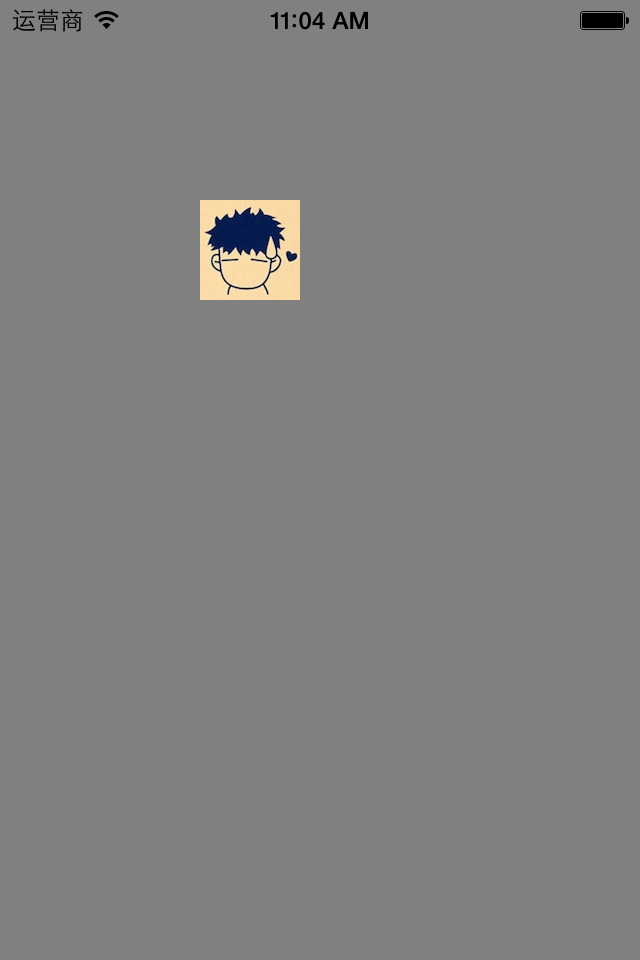
eg:讓一個view隨著手指的移動而移動
/**
 * 當手指在view上移動時調用
 *
 * @param touches <#touches description#>
 * @param event  <#event description#>
 */
- (void)touchesMoved:(NSSet<UITouch *> *)touches withEvent:(UIEvent *)event {
  NSLog(@"%s",__func__);

  //獲取UITouch對象
  UITouch *touch = [touches anyObject];

  //獲取當前點的位置
  CGPoint curP = [touch locationInView:self];

  //獲取上一個點的位置
  CGPoint preP = [touch previousLocationInView:self];

  //計算x的偏移量
  CGFloat offsetX = curP.x - preP.x;

  //計算y的偏移量
  CGFloat offsetY = curP.y = preP.y;

  //修改view的位置
  self.transform = CGAffineTransformTranslate(self.transform, offsetX, offsetY);
}
就是根據UITouch對象中保存的位置信息來實現的。
事件的產生和傳遞:
當觸摸事件產生後,系統會將該事件添加到一個由UIApplication管理的事件隊列中去。UIApplication會從隊列中取出最前面的事件,發送給應用程序的主窗口的處理。主窗口會在視圖層次結構中,找一個最合適的視圖並調用touches方法來處理觸摸事件。觸摸事件的傳遞是從父控件傳遞到子控件。如果父控件不能接收到觸摸事件,那麼子控件就不可能 接收到觸摸事件。
如何找到最合適的控件來處理事件?首先判斷自己是否能接收觸摸事件?觸摸點是否在自己身上?從後往前遍歷子控件,重復之前的兩個步驟,如果沒有符合條件的子控件,那麼就自己最合適處理。
控件用hitTest:withEvent:方法來尋找最合適的view,用pointInside這個方法判斷這個點在不在方法調用者即控件身上。
hitTest方法的底層實現:
- (UIView *)hitTest:(CGPoint)point withEvent:(UIEvent *)event {

  //判斷當前控件是否能接收觸摸事件
  if (self.userInteractionEnabled == NO || self.hidden == YES || self.alpha <= 0.01) {
    return nil;
  }

  //判斷觸摸點是否在當前控件上
  if ([self pointInside:point withEvent:event] == NO) {
    return nil;
  }

  //從後往前遍歷自己的子控件
  NSInteger count = self.subviews.count;
  for (NSInteger i = count - 1; i >= 0; i--) {
    UIView *childView = self.subviews[i];

    //把當前控件上的坐標系轉換成子控件上的坐標系
    CGPoint childPoint = [self convertPoint:point toView:childView];

    //遞歸調用hitTest方法尋找最合適的view
    UIView *fitView = [childView hitTest:childPoint withEvent:event];

    if (fitView) {
      return fitView;
    }
  }

  //循環結束,沒有比自己更合適的view,返回自己
  return self;

}
然而使用touches方法監聽觸摸事件是有缺點的,比如要自定義view,所以iOS3.2之後蘋果推出了手勢識別功能UIGestureRecognizer。UIGestureRecognizer是一個抽象類,它的子類才能處理具體的某個手勢。
具體有以下幾種手勢:
//點按手勢
//  UITapGestureRecognizer *tap = [UITapGestureRecognizer alloc]initWithTarget:<#(nullable id)#> action:<#(nullable SEL)#>

  //長按手勢 默認是觸發兩次
//  UILongPressGestureRecognizer *longP = [UILongPressGestureRecognizer alloc]initWithTarget:<#(nullable id)#> action:<#(nullable SEL)#>

  //輕掃手勢 默認方向是往右
//  UISwipeGestureRecognizer *swipe = [UISwipeGestureRecognizer alloc]initWithTarget:<#(nullable id)#> action:<#(nullable SEL)#>

  //旋轉手勢
//  UIRotationGestureRecognizer *rotation = [UIRotationGestureRecognizer alloc]initWithTarget:<#(nullable id)#> action:<#(nullable SEL)#>

  //捏合手勢
//  UIPinchGestureRecognizer *pinch = [UIPinchGestureRecognizer alloc]initWithTarget:<#(nullable id)#> action:<#(nullable SEL)#>

  //拖拽手勢
//  UIPanGestureRecognizer *pan = [UIPanGestureRecognizer alloc]initWithTarget:<#(nullable id)#> action:<#(nullable SEL)#>
實際運用:
@interface ViewController ()<UIGestureRecognizerDelegate>
@property (weak, nonatomic) IBOutlet UIImageView *imageView;

@end

@implementation ViewController

- (void)viewDidLoad {
  [super viewDidLoad];

  [self setUpPinch];

  [self setUpRotation];

  [self setUpPan];

}
#pragma mark - 手勢代理方法
// 是否允許開始觸發手勢
//- (BOOL)gestureRecognizerShouldBegin:(UIGestureRecognizer *)gestureRecognizer
//{
//  return NO;
//}

// 是否允許同時支持多個手勢,默認是不支持多個手勢
// 返回yes表示支持多個手勢
- (BOOL)gestureRecognizer:(UIGestureRecognizer *)gestureRecognizer shouldRecognizeSimultaneouslyWithGestureRecognizer:(UIGestureRecognizer *)otherGestureRecognizer
{
  return YES;
}

// 是否允許接收手指的觸摸點
//- (BOOL)gestureRecognizer:(UIGestureRecognizer *)gestureRecognizer shouldReceiveTouch:(UITouch *)touch{
//  // 獲取當前的觸摸點
//  CGPoint curP = [touch locationInView:self.imageView];
//
//  if (curP.x < self.imageView.bounds.size.width * 0.5) {
//    return NO;
//  }else{
//    return YES;
//  }
//}


#pragma mark - 點按手勢

- (void)setUpTap
{
  // 創建點按手勢
  UITapGestureRecognizer *tap = [[UITapGestureRecognizer alloc] initWithTarget:self action:@selector(tap:)];

  tap.delegate = self;

  [_imageView addGestureRecognizer:tap];
}

- (void)tap:(UITapGestureRecognizer *)tap
{
  NSLog(@"%s",__func__);
}

#pragma mark - 長按手勢
// 默認會觸發兩次
- (void)setUpLongPress
{
  UILongPressGestureRecognizer *longPress = [[UILongPressGestureRecognizer alloc] initWithTarget:self action:@selector(longPress:)];

  [self.imageView addGestureRecognizer:longPress];
}


- (void)longPress:(UILongPressGestureRecognizer *)longPress
{

  if (longPress.state == UIGestureRecognizerStateBegan) {

    NSLog(@"%s",__func__);
  }
}

#pragma mark - 輕掃
- (void)setUpSwipe
{
  // 默認輕掃的方向是往右
  UISwipeGestureRecognizer *swipe = [[UISwipeGestureRecognizer alloc] initWithTarget:self action:@selector(swipe)];

  swipe.direction = UISwipeGestureRecognizerDirectionUp;

  [self.imageView addGestureRecognizer:swipe];

  // 如果以後想要一個控件支持多個方向的輕掃,必須創建多個輕掃手勢,一個輕掃手勢只支持一個方向
  // 默認輕掃的方向是往右
  UISwipeGestureRecognizer *swipeDown = [[UISwipeGestureRecognizer alloc] initWithTarget:self action:@selector(swipe)];

  swipeDown.direction = UISwipeGestureRecognizerDirectionDown;

  [self.imageView addGestureRecognizer:swipeDown];


}

- (void)swipe
{
  NSLog(@"%s",__func__);
}

#pragma mark - 旋轉手勢
- (void)setUpRotation
{
  UIRotationGestureRecognizer *rotation = [[UIRotationGestureRecognizer alloc] initWithTarget:self action:@selector(rotation:)];
  rotation.delegate = self;
  [self.imageView addGestureRecognizer:rotation];
}

// 默認傳遞的旋轉的角度都是相對於最開始的位置
- (void)rotation:(UIRotationGestureRecognizer *)rotation
{

  self.imageView.transform = CGAffineTransformRotate(self.imageView.transform, rotation.rotation);

  // 復位
  rotation.rotation = 0;

  // 獲取手勢旋轉的角度
  NSLog(@"%f",rotation.rotation);
}

#pragma mark - 捏合
- (void)setUpPinch
{
  UIPinchGestureRecognizer *pinch = [[UIPinchGestureRecognizer alloc] initWithTarget:self action:@selector(pinch:)];
  pinch.delegate = self;
  [self.imageView addGestureRecognizer:pinch];
}

- (void)pinch:(UIPinchGestureRecognizer *)pinch
{
  self.imageView.transform = CGAffineTransformScale(self.imageView.transform, pinch.scale, pinch.scale);

  // 復位

  pinch.scale = 1;
}

#pragma mark - 拖拽
- (void)setUpPan
{
  UIPanGestureRecognizer *pan = [[UIPanGestureRecognizer alloc] initWithTarget:self action:@selector(pan:)];


  [self.imageView addGestureRecognizer:pan];
}

- (void)pan:(UIPanGestureRecognizer *)pan
{
  // 獲取手勢的觸摸點
  // CGPoint curP = [pan locationInView:self.imageView];

  // 移動視圖
  // 獲取手勢的移動,也是相對於最開始的位置
  CGPoint transP = [pan translationInView:self.imageView];

  self.imageView.transform = CGAffineTransformTranslate(self.imageView.transform, transP.x, transP.y);

  // 復位
  [pan setTranslation:CGPointZero inView:self.imageView];

 // NSLog(@"%@",NSStringFromCGPoint(curP));
}

@end
以上就是iOS觸摸事件以及手勢的相關內容介紹,希望對大家學習iOS程序設計有所幫助。
- 上一頁:iOS通過多種方式創建控制器
- 下一頁:iOS抽屜效果開發案例分享