在iOS上實現一個簡單的日歷控件
編輯:IOS開發綜合
近期需要寫一個交互有點DT的日歷控件,具體交互細節這裡略過不表。
不過再怎麼復雜的控件,也是由基礎的零配件組裝起來的,這裡最基本的就是日歷控件。
先上圖:
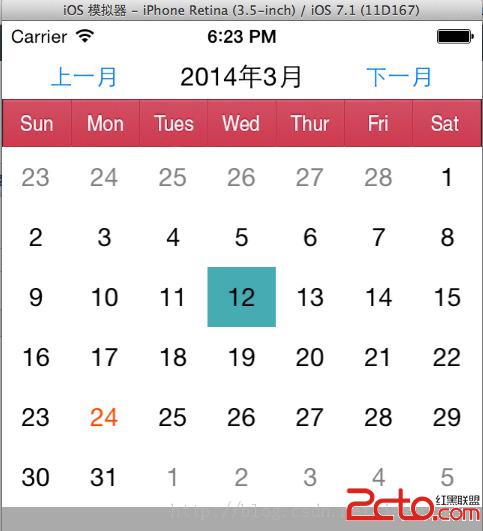
從圖中可以看出日歷控件就是由一個個小方塊組成的,每一行有7個小方塊,分別表示一周的星期天到星期六。
給定一個月份,我們首先需要知道這個月有多少周。那麼如何確定一個月有多少周呢?
我是這麼想的,在NSDate上做擴展:
@interface NSDate (WQCalendarLogic)
0. 首先需要知道這個月有多少天:
- (NSUInteger)numberOfDaysInCurrentMonth
{
    // 頻繁調用 [NSCalendar currentCalendar] 可能存在性能問題
    return [[NSCalendar currentCalendar] rangeOfUnit:NSDayCalendarUnit inUnit:NSMonthCalendarUnit forDate:self].length;
}
1. 確定這個月的第一天是星期幾。這樣就能知道給定月份的第一周有幾天:
- (NSDate *)firstDayOfCurrentMonth
{
    NSDate *startDate = nil;
    BOOL ok = [[NSCalendar currentCalendar] rangeOfUnit:NSMonthCalendarUnit startDate:&startDate interval:NULL forDate:self];
    NSAssert1(ok, @"Failed to calculate the first day of the month based on %@", self);
    return startDate;
}

- (NSUInteger)weeklyOrdinality
{
    return [[NSCalendar currentCalendar] ordinalityOfUnit:NSDayCalendarUnit inUnit:NSWeekCalendarUnit forDate:self];
}
2. 減去第一周的天數,剩余天數除以7,得到倍數和余數:
- (NSUInteger)numberOfWeeksInCurrentMonth
{
    NSUInteger weekday = [[self firstDayOfCurrentMonth] weeklyOrdinality];

    NSUInteger days = [self numberOfDaysInCurrentMonth];
    NSUInteger weeks = 0;

    if (weekday > 1) {
        weeks += 1, days -= (7 - weekday + 1);
    }

    weeks += days / 7;
    weeks += (days % 7 > 0) ? 1 : 0;

    return weeks;
}
到這裡,就可以知道一個月有多少行多少列,從而計算出需要多少個小方塊來展示:
@interface WQCalendarTileView : UIView
這些小方塊用一個大方塊來承載:
@interface WQCalendarGridView : UIView @property (nonatomic, weak) iddataSource; @property (nonatomic, weak) id delegate; - (void)reloadData;
和UITableView類似,當WQCalendarGridView調用reloadData接口時,會開始進行布局。而布局所需要的信息由dataSource和delegate提供:
@class WQCalendarGridView; @protocol WQCalendarGridViewDataSource@required - (NSUInteger)numberOfRowsInGridView:(WQCalendarGridView *)gridView; - (WQCalendarTileView *)gridView:(WQCalendarGridView *)gridView tileViewForRow:(NSUInteger)row column:(NSUInteger)column; @optional - (CGFloat)heightForRowInGridView:(WQCalendarGridView *)gridView; @end @protocol WQCalendarGridViewDelegate - (void)gridView:(WQCalendarGridView *)gridView didSelectAtRow:(NSUInteger)row column:(NSUInteger)column; @end
每一行的高度,heightForRow,我比較傾向於由dataSource提供 :)
第一個dataSource方法上面已經可以計算出來了,第二個dataSource方法需要對每一個tile進行配置,比如非當前月的以灰色展示,那麼我們就需要知道當前月展示中包含的 上個月殘留部分,和 下個月的開頭部分:
#pragma mark - method to calculate days in previous, current and the following month.

- (void)calculateDaysInPreviousMonthWithDate:(NSDate *)date
{
    NSUInteger weeklyOrdinality = [[date firstDayOfCurrentMonth] weeklyOrdinality];
    NSDate *dayInThePreviousMonth = [date dayInThePreviousMonth];

    NSUInteger daysCount = [dayInThePreviousMonth numberOfDaysInCurrentMonth];
    NSUInteger partialDaysCount = weeklyOrdinality - 1;

    NSDateComponents *components = [dayInThePreviousMonth YMDComponents];

    self.daysInPreviousMonth = [NSMutableArray arrayWithCapacity:partialDaysCount];
    for (int i = daysCount - partialDaysCount + 1; i < daysCount + 1; ++i) {
        WQCalendarDay *calendarDay = [WQCalendarDay calendarDayWithYear:components.year month:components.month day:i];
        [self.daysInPreviousMonth addObject:calendarDay];
        [self.calendarDays addObject:calendarDay];
    }
}

- (void)calculateDaysInCurrentMonthWithDate:(NSDate *)date
{
    NSUInteger daysCount = [date numberOfDaysInCurrentMonth];
    NSDateComponents *components = [date YMDComponents];

    self.daysInCurrentMonth = [NSMutableArray arrayWithCapacity:daysCount];
    for (int i = 1; i < daysCount + 1; ++i) {
        WQCalendarDay *calendarDay = [WQCalendarDay calendarDayWithYear:components.year month:components.month day:i];
        [self.daysInCurrentMonth addObject:calendarDay];
        [self.calendarDays addObject:calendarDay];
    }
}

- (void)calculateDaysInFollowingMonthWithDate:(NSDate *)date
{
    NSUInteger weeklyOrdinality = [[date lastDayOfCurrentMonth] weeklyOrdinality];
    if (weeklyOrdinality == 7) return ;

    NSUInteger partialDaysCount = 7 - weeklyOrdinality;
    NSDateComponents *components = [[date dayInTheFollowingMonth] YMDComponents];

    self.daysInFollowingMonth = [NSMutableArray arrayWithCapacity:partialDaysCount];
    for (int i = 1; i < partialDaysCount + 1; ++i) {
        WQCalendarDay *calendarDay = [WQCalendarDay calendarDayWithYear:components.year month:components.month day:i];
        [self.daysInFollowingMonth addObject:calendarDay];
        [self.calendarDays addObject:calendarDay];
    }
}
到此,就可以順利地展現出給定月份的日歷控件了。最近項目比較忙,隨手記一篇 :)


相關文章
+