
iOS 多線程GCD的基本使用
編輯:IOS技巧綜合
[摘要]本文是對iOS 多線程GCD的基本使用的講解,對學習IOS蘋果軟件開發有所幫助,與大家分享。
《iOS多線程簡介》中提到:GCD中有2個核心概念:1、任務(執行什麼操作)2、隊列(用來存放任務)
那麼多線程GCD的基本使用有哪些呢?
可以分以下多種情況:
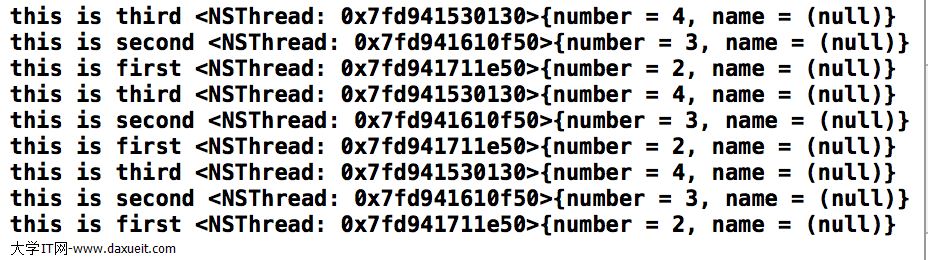
1、異步函數 + 並發隊列
/**
 * 異步函數 + 並發隊列:可以同時開啟多條線程
 */
- (void)asyncConcurrent
{
    // 1.創建一個並發隊列
    // dispatch_queue_create(const char *label, dispatch_queue_attr_t attr);
    // label : 相當於隊列的名字
    // dispatch_queue_t queue = dispatch_queue_create("com.kyle.queue", DISPATCH_QUEUE_CONCURRENT);

    // 1.獲得全局的並發隊列
    dispatch_queue_t queue = dispatch_get_global_queue(DISPATCH_QUEUE_PRIORITY_DEFAULT, 0);

    // 2.將任務加入隊列
    dispatch_async(queue, ^{
        for (NSInteger i = 0; i<3; i++) {
            NSLog(@"this is first %@",[NSThread currentThread]);
        }
    });
    dispatch_async(queue, ^{
        for (NSInteger i = 0; i<3; i++) {
            NSLog(@"this is second %@",[NSThread currentThread]);
        }
    });

    dispatch_async(queue, ^{
        for (NSInteger i = 0; i<3; i++) {
            NSLog(@"this is third %@",[NSThread currentThread]);
        }
    });

}
2、同步函數 + 並發隊列
/**
 * 同步函數 + 並發隊列:不會開啟新的線程
 */

- (void)syncConcurrent
{
    // 1.獲得全局的並發隊列
    dispatch_queue_t queue = dispatch_get_global_queue(DISPATCH_QUEUE_PRIORITY_DEFAULT, 0);

    // 2.將任務加入隊列
    dispatch_sync(queue, ^{
        NSLog(@"this is first %@",[NSThread currentThread]);
    });
    dispatch_sync(queue, ^{
        NSLog(@"this is second %@",[NSThread currentThread]);
    });
    dispatch_sync(queue, ^{
        NSLog(@"this is third %@",[NSThread currentThread]);
    });

}

3、異步函數 + 串行隊列
/**
 * 異步函數 + 串行隊列:會開啟新的線程,但是任務是串行的,執行完一個任務,再執行下一個任務
 */
- (void)asyncSerial
{
    // 1.創建串行隊列
    dispatch_queue_t queue = dispatch_queue_create("com.kyle.queue", DISPATCH_QUEUE_SERIAL);
    //    dispatch_queue_t queue = dispatch_queue_create("com.kyle.queue", NULL);

    // 2.將任務加入隊列
    dispatch_async(queue, ^{
        NSLog(@"this is first %@",[NSThread currentThread]);
    });
    dispatch_async(queue, ^{
        NSLog(@"this is second %@",[NSThread currentThread]);
    });
    dispatch_async(queue, ^{
        NSLog(@"this is third %@",[NSThread currentThread]);
    });
}

4、同步函數 + 串行隊列
/**
 * 同步函數 + 串行隊列:不會開啟新的線程,在當前線程執行任務。任務是串行的,執行完一個任務,再執行下一個任務
 */
- (void)syncSerial
{
    // 1.創建串行隊列
    dispatch_queue_t queue = dispatch_queue_create("com.kyle.queue", DISPATCH_QUEUE_SERIAL);

    // 2.將任務加入隊列
    dispatch_sync(queue, ^{
        NSLog(@"this is first %@",[NSThread currentThread]);
    });
    dispatch_sync(queue, ^{
        NSLog(@"this is second %@",[NSThread currentThread]);
    });
    dispatch_sync(queue, ^{
        NSLog(@"this is third %@",[NSThread currentThread]);
    });
}

5、異步函數 + 主隊列
// * 異步函數 + 主隊列:只在主線程中執行任務

- (void)asyncMain
{
    // 1.獲得主隊列
    dispatch_queue_t  queue =  dispatch_get_main_queue();
    // 2.將任務加入隊列
    dispatch_async(queue, ^{
        NSLog(@"this is first %@",[NSThread currentThread]);
        NSLog(@"this is second %@",[NSThread currentThread]);
        NSLog(@"this is third %@",[NSThread currentThread]);
    });
}

6、同步函數 + 主隊列
// * 同步函數 + 主隊列:
- (void)syncMain
{
    NSLog(@"begin");

    // 1.獲得主隊列
    dispatch_queue_t queue =  dispatch_get_main_queue();
    // 2.將任務加入隊列
    dispatch_sync(queue, ^{
        NSLog(@"this is %@",[NSThread currentThread]);

    });
    NSLog(@"end");
}
造成“相互等待的死鎖”
相關文章
+
- 支付寶指紋支付怎麼用 支付寶錢包指紋支付設置教程
- iOS 之單例,代理,通知,KVO,Block全能解析
- 聯通版iPhone5S/5C支持雙4G移動網絡嗎 升級版Phone5S支持雙4G移動網絡
- iPhone5S指紋識別怎麼用 iPhone5S指紋識別設置教程
- iPhone官翻機哪裡買?蘋果官翻iPhone購買攻略
- 如何判斷iPhone是正品行貨? 激活時間吻合是正品行貨嗎?
- iPhone夜間亮度最低還刺眼?iPhone弱光模式開啟教程
- iOS8電量管理功能在哪?找出蘋果iOS8耗電快的應用方法教程
- ibook store鏈接不上 ibook store為什麼鏈接不上了
- iOS 8.3修復Wi